

Mob/Whatsapp:
+86-18098163178
E-mail:
sales19@rongroup.co


Creating an appealing and durable outdoor dining area has become increasingly important for restaurants, cafés, and hotels, especially as guests seek relaxed environments where they can enjoy open-air meals. To build an outdoor space that not only enhances dining experiences but also withstands constant exposure to sun, moisture, and shifting temperatures, restaurant owners must select weather-resistant, structurally sound, and commercially engineered furniture designed specifically for patio environments.
1. Choosing the Right Materials for Outdoor Chairs
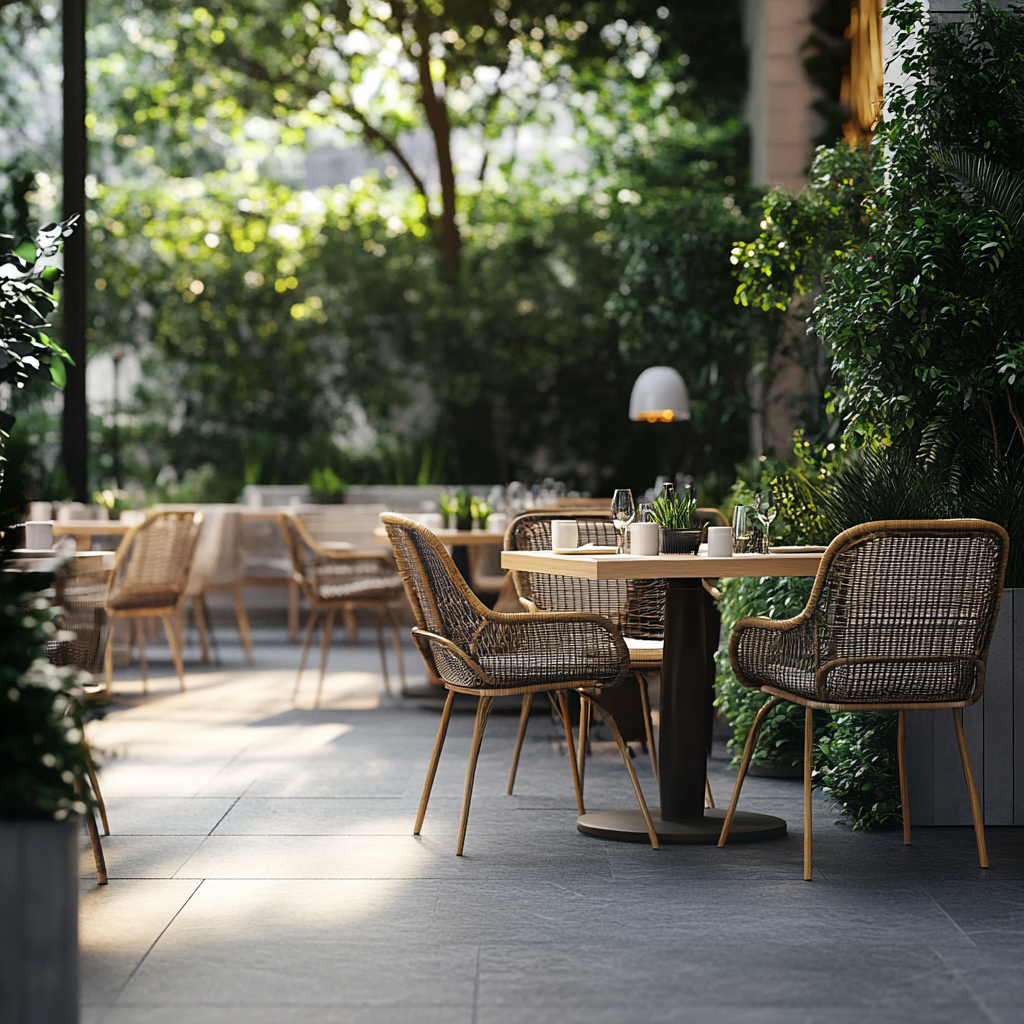
Outdoor chairs must be able to resist rust, fading, and structural weakening. Aluminum remains one of the most reliable options due to its lightweight nature and excellent resistance to corrosion. It is easy to move, stack, and clean, making it ideal for high-turnover patios. Synthetic rattan, when woven over sturdy metal frames, offers a comfortable and visually appealing choice that performs well in warm, humid climates. For restaurants seeking long-term sustainability and durability, HDPE (Polywood) provides outstanding weather resistance and imitates the look of natural wood without the associated maintenance.
2. Selecting Durable and Stable Outdoor Tables
Outdoor tables must maintain structural stability even when subjected to wind, temperature changes, and frequent cleaning. Powder-coated metal tables offer excellent durability and modern aesthetics, while HPL (high-pressure laminate) tabletops provide outstanding resistance to heat, scratches, and stains. Teak or other outdoor woods deliver a warm, natural appearance, though they require periodic sealing to retain their finish. The choice ultimately depends on the intended atmosphere and maintenance schedule the restaurant can accommodate.
3. Key Features That Improve Longevity
Commercial outdoor furniture must incorporate several essential features to ensure multi-season durability. UV protection prevents fading and material brittleness, rust-resistant frames ensure stability, and non-slip feet improve guest safety. Stackability is also a valuable feature, enabling efficient storage during extreme weather or off-season months. Surfaces should be smooth, easy to sanitize, and compatible with commercial cleaning products.
4. Designing a Comfortable and Efficient Patio Layout
Effective patio design requires balancing visual appeal with functionality. A mix of two-top and four-top tables increases seating flexibility and improves table turnover. Umbrellas, pergolas, or shade structures enhance comfort, especially in regions with strong sun exposure. Adequate aisle spacing must be maintained to allow servers to navigate efficiently and reduce crowding during peak hours.
Conclusion
Outdoor restaurant furniture must combine practical durability with strong visual appeal to create an inviting and long-lasting patio environment. By selecting weather-resistant materials, structurally robust designs, and thoughtful layout arrangements, restaurant owners can build an outdoor dining space that performs reliably season after season while elevating the overall guest experience.


