

Mob/Whatsapp:
+86-18098163178
E-mail:
sales19@rongroup.co


Bar stools serve an essential role in modern restaurants, cafés, bars, and bistros, functioning not only as seating but also as architectural elements that help define the spatial character of elevated dining zones. Selecting the right bar stool requires thoughtful consideration of height precision, durability, ergonomics, and structural safety, as these factors directly influence guest comfort and operational efficiency. When properly chosen, bar stools contribute significantly to the restaurant’s ambiance, reinforce design cohesion, and support a smooth, enjoyable dining experience.
1. Understanding Bar Stool Height: The Foundation of Usability
The most critical factor in choosing bar stools is ensuring the correct height relative to the counter. A stool that is too high creates discomfort; one that is too low disrupts posture and usability. For most commercial spaces:
Counter-height stools typically range between 60–68 cm, suitable for counters measuring 88–95 cm.
Bar-height stools generally fall between 72–80 cm, designed for bar counters around 100–110 cm.
The ideal arrangement allows guests to sit with relaxed posture, maintaining a comfortable gap between the seat and counter without crowding the knees or leaning excessively forward.
2. Material Selection and Its Impact on Durability
Bar stools experience concentrated weight distribution and repeated movement, making material choice essential for longevity.
Metal frames (steel or aluminum) are preferred in high-traffic environments due to their structural stability and resistance to deformation. Powder coating enhances corrosion resistance and provides clean, modern aesthetics.
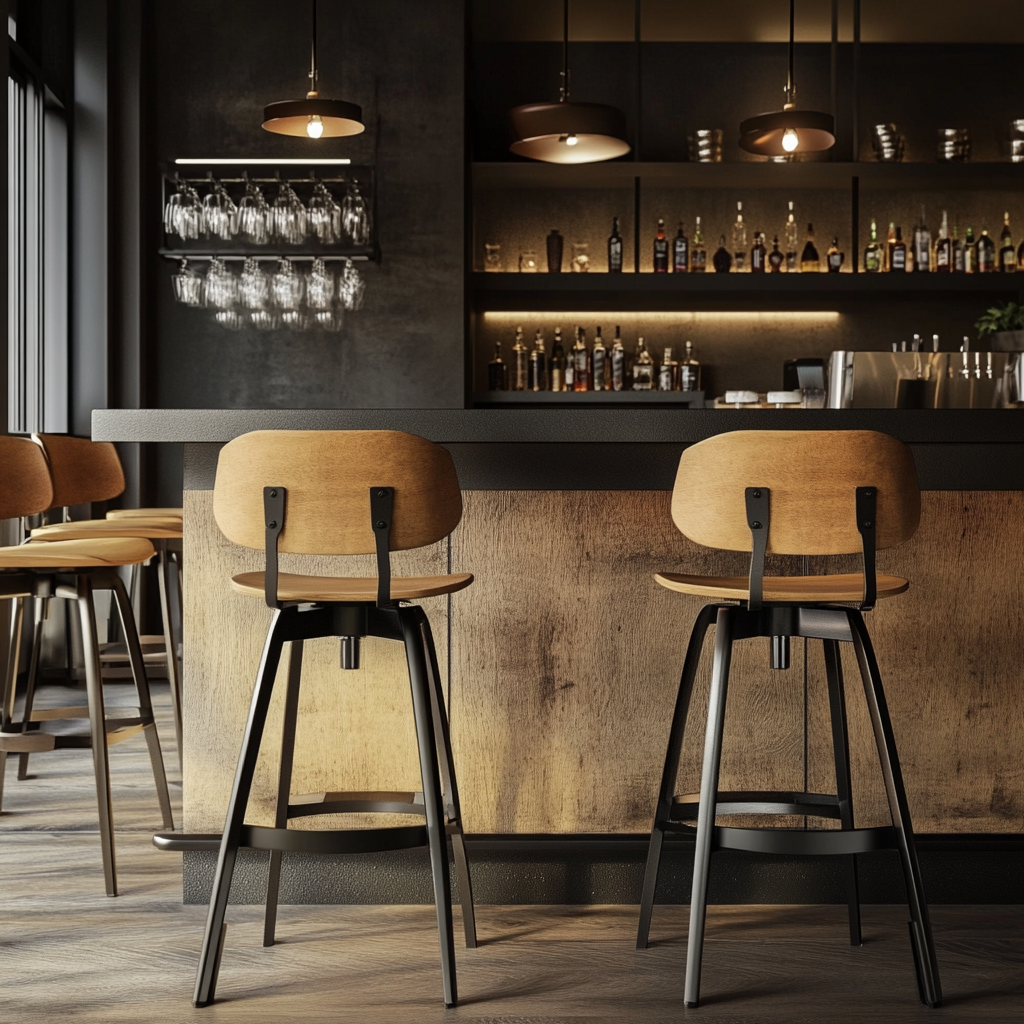
Wooden bar stools offer warmth and natural beauty, making them suitable for traditional, rustic, or upscale interiors. Walnut, oak, and ash are particularly favored for their strength.
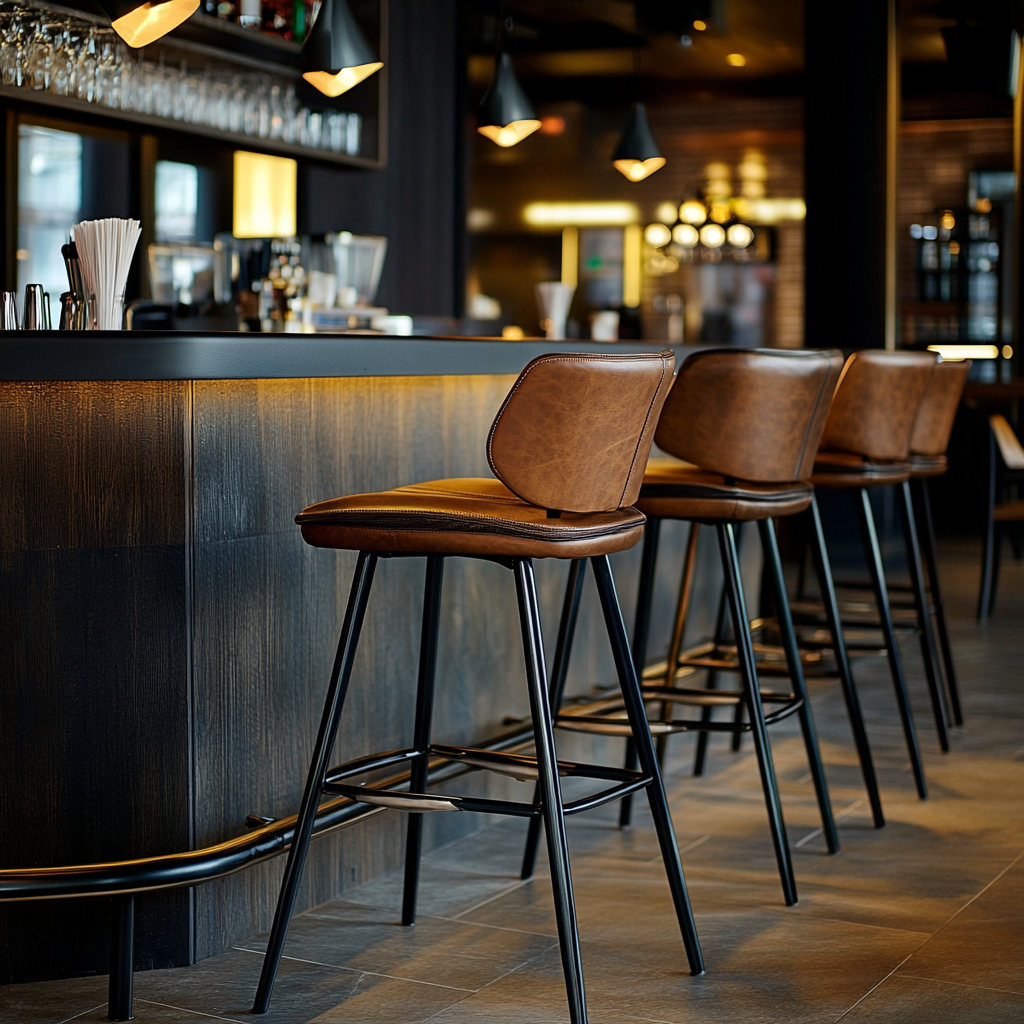
Upholstered bar stools, whether in leather, vinyl, or fabric, elevate comfort and visual appeal. They work especially well in cafés or lounges where guests stay longer.
A well-balanced combination of metal support and wooden or upholstered seating often delivers both durability and comfort.
3. Ensuring Safety and Long-Term Structural Integrity
Commercial bar stools must include safety-focused construction to withstand daily use. Features such as reinforced welds, cross-support footrests, wide anti-tip bases, and non-slip feet contribute significantly to user stability. Additionally, the choice of foam density in upholstered models affects both comfort and longevity; higher-density foam maintains shape over extended periods, preventing premature sagging.
Safety considerations also extend to weight distribution. Stools with narrow bases or overly lightweight frames may tip easily, especially when guests shift or turn. A stable, well-engineered base is essential for preventing accidents and ensuring consistent performance.
4. Selecting Bar Stools That Support Restaurant Flow and Atmosphere
Beyond technical specifications, bar stools act as visual anchors that shape a restaurant’s personality. Sleek metal-framed stools complement industrial or minimalist interiors, while wooden stools enhance warmth in bistro-style settings. Upholstered models add a sense of luxury suitable for hotel lounges or cocktail bars.
When selecting bar stools, restaurants should consider how these pieces interact with surrounding furniture, lighting, and materials. A cohesive bar stool choice reinforces the entire design narrative, helping create a seamless and memorable guest impression.
Conclusion
Commercial bar stools play a more influential role than many operators realize. By carefully evaluating height accuracy, material durability, stability features, and aesthetic coherence, restaurant owners can invest in stools that offer both functional reliability and design sophistication. The right bar stool enriches the dining experience, enhances safety, and integrates harmoniously with the broader interior vision.


