A well-planned restaurant floor plan allows more guests to dine comfortably without making the space feel cramped. The goal is not only to increase capacity but to ensure that every movement—whether from guests or staff—feels natural and unobstructed. Smart layout decisions transform even small dining rooms into efficient, welcoming environments.
The first principle is spacing. Aisles should be wide enough for staff to move quickly and safely, especially during peak service. Narrow aisles slow service, create bottlenecks, and make guests feel watched or brushed against. Maintaining balanced spacing between tables allows the restaurant to seat more people while preserving a sense of privacy.
Seating type affects how the floor plan develops. Booth seating uses vertical space and creates structured pathways, which helps organize the dining room. Banquettes, meanwhile, increase seating along walls and corners, allowing more guests to sit in areas that chairs cannot fully utilize. Combining both increases flexibility and supports different dining styles.
Table shapes influence how efficiently the restaurant uses its footprint. Rectangular tables fit tightly against walls, making them ideal for narrow spaces, while round tables create natural flow in open areas and reduce sharp edges in busy dining rooms. Modular tables that can join or separate provide additional flexibility for large groups or off-peak hours.
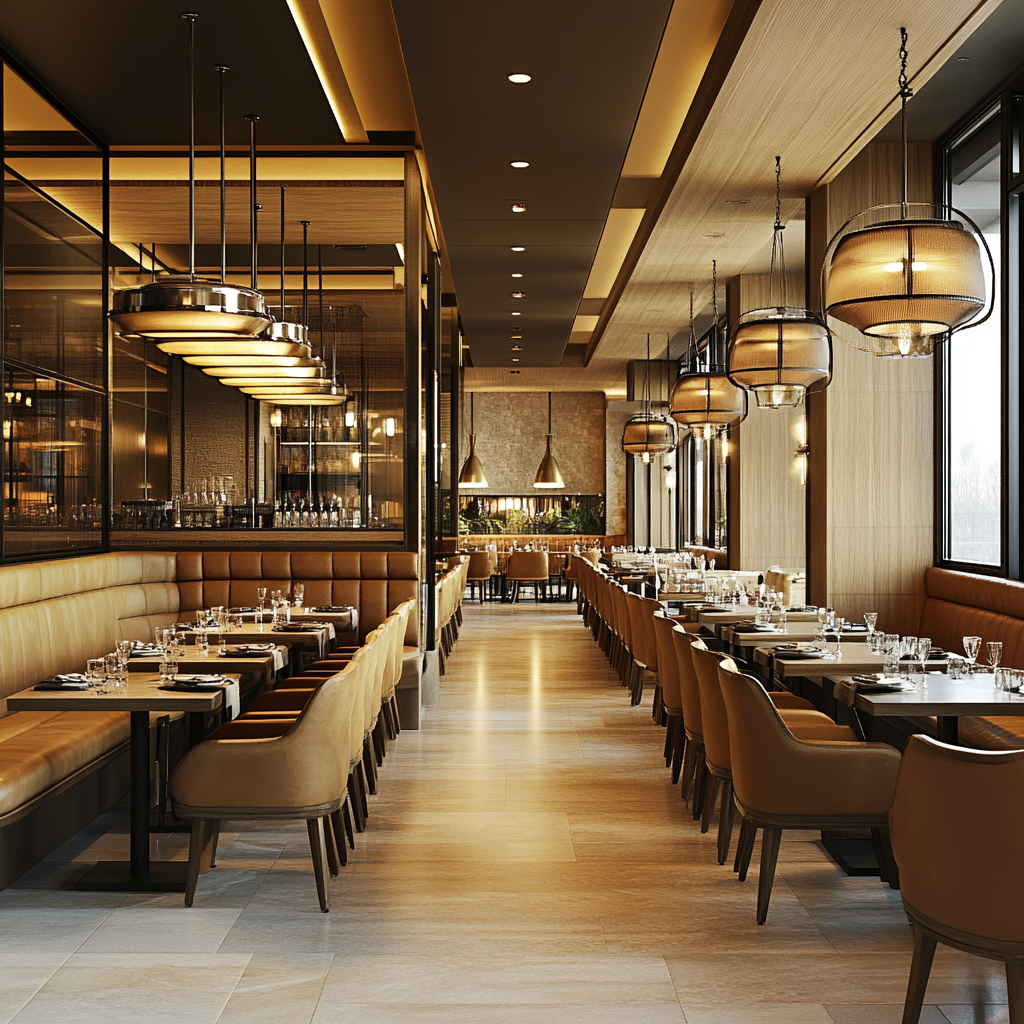
Furniture dimensions play an equally important role. Slim-profile chairs, compact booth backs, and narrow table bases open valuable floor area without compromising comfort. Selecting commercial-grade furniture with a smaller footprint increases capacity immediately, even before adjusting the layout.
Visual openness helps the restaurant feel larger than it is. Using consistent materials, lighter colors, and warm lighting reduces visual clutter. Glass partitions or low dividers provide separation while maintaining sightlines across the dining room. When the space feels open, guests perceive the environment as comfortable even in higher-density layouts.
Flow must remain the top priority. Entrances, POS stations, restrooms, and service areas should connect smoothly with the dining area. A good floor plan minimizes cross-traffic between staff and guests, preventing accidental collisions and maintaining a calm environment. If the layout supports staff movement, the dining experience naturally becomes smoother.
Designing a restaurant floor plan is ultimately about balance. By combining space-efficient furniture, thoughtful spacing, and a clear circulation path, restaurants can increase seating capacity without sacrificing comfort. A well-designed layout does more than maximize revenue—it creates a dining experience that feels organized, spacious, and welcoming for every guest.


