In restaurant operations, furniture cost is often evaluated at the moment of purchase. However, experienced operators understand that seating is not a one-time expense. The real cost of restaurant seating is revealed over time, particularly across a five-year operating cycle where wear, maintenance, and replacement accumulate.
Low-quality seating tends to fail at predictable points. Chairs with weak joinery loosen under repeated lateral movement. Thin metal tubing bends under uneven loading. Low-density foam compresses, permanently changing seat height and comfort. These failures do not happen suddenly; they compound gradually, creating constant maintenance interruptions.
Long-lasting commercial restaurant seating is designed to resist these failure patterns. Solid wood frames that are properly kiln-dried maintain structural integrity under changing humidity. Welded steel frames with sufficient wall thickness resist deformation. High-resilience foam recovers its shape after thousands of seating cycles, preserving both comfort and visual consistency.
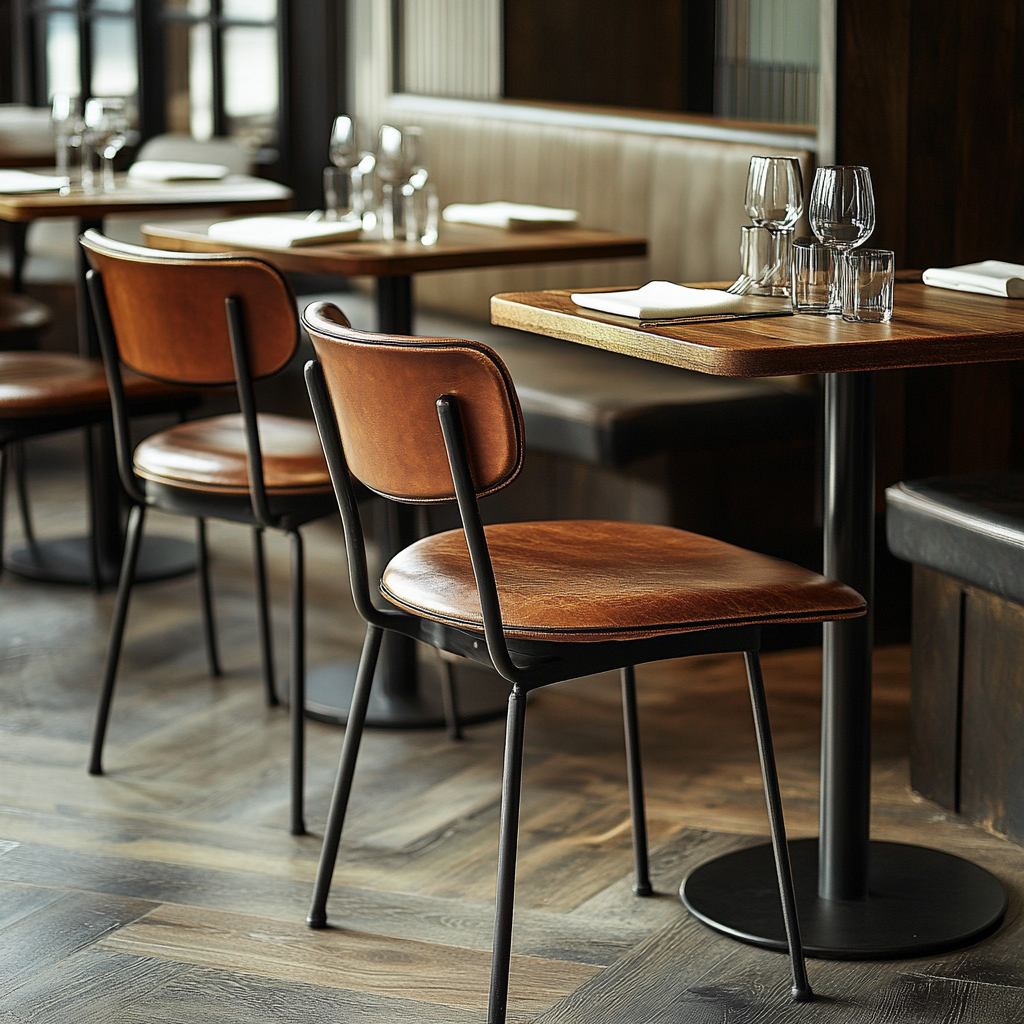
Material choice also determines surface longevity. Commercial upholstery must resist abrasion, cleaning chemicals, and moisture. Chairs upholstered with contract-grade leather, vinyl, or performance fabric reduce surface degradation and labor time. Over five years, this directly translates into fewer repairs and lower replacement frequency.
Restaurants with high daily traffic benefit the most from heavy-duty restaurant seating solutions. While the upfront cost may be higher, the long-term financial outcome is more predictable. Seating remains stable, visual standards are maintained, and unexpected downtime caused by broken furniture is minimized.
Another often-overlooked factor is brand consistency. Frequent seating replacement leads to mismatched styles, finishes, and seat heights. Durable seating avoids this fragmentation, preserving the intended dining atmosphere over time.
In commercial environments, durability is not a luxury. It is a cost-control mechanism and a brand protection strategy.


