

Mob/Whatsapp:
+86-18098163178
E-mail:
sales19@rongroup.co


Restaurant tables may look simple at first glance, but they carry one of the most important responsibilities in daily restaurant operations. They support food presentation, guest comfort, staff service, cleaning efficiency, table turnover, and the overall appearance of the dining room. When the wrong tables are selected, a restaurant can quickly feel crowded, unstable, difficult to maintain, or visually outdated.
For commercial dining spaces, choosing restaurant tables should never depend on appearance alone. The best tables need to match the restaurant concept, support daily service, withstand frequent cleaning, and work smoothly with chairs, booths, and circulation routes. For restaurant owners, hotel operators, cafés, bars, and hospitality buyers, a table is not simply a piece of furniture; it is part of the complete dining experience and a long-term business investment.
1. Start with the Restaurant Concept Before Choosing the Table
Before deciding on table materials, sizes, colors, or finishes, operators should first understand how the restaurant will actually function. A fast casual restaurant needs durable and easy-clean tables that support quick turnover, while a hotel dining room may require a more refined finish and a flexible layout for breakfast, lunch, dinner, and private events. A steakhouse, bistro, café, or fine dining restaurant may each require a different table style because the atmosphere, menu structure, customer behavior, and service rhythm are not the same.
The table should match the business model, not just the interior style. If the restaurant serves shared dishes, the tabletop must provide enough usable space for plates, drinks, tableware, and serving items. If the space focuses on quick meals, the table should support efficiency, easy cleaning, and smooth movement. If the concept is more premium, the table should help create a stronger sense of quality and comfort. A suitable restaurant table should support both the brand image and the practical rhythm of daily service.
2. Choose Tabletop Materials That Can Handle Commercial Use
The tabletop is the surface guests interact with most, which means the material directly affects both customer experience and long-term maintenance cost. Restaurant tabletops need to handle plates, glasses, sauces, hot dishes, repeated wiping, cleaning chemicals, and constant guest contact. For this reason, tabletop materials should be selected according to commercial performance rather than visual preference alone.
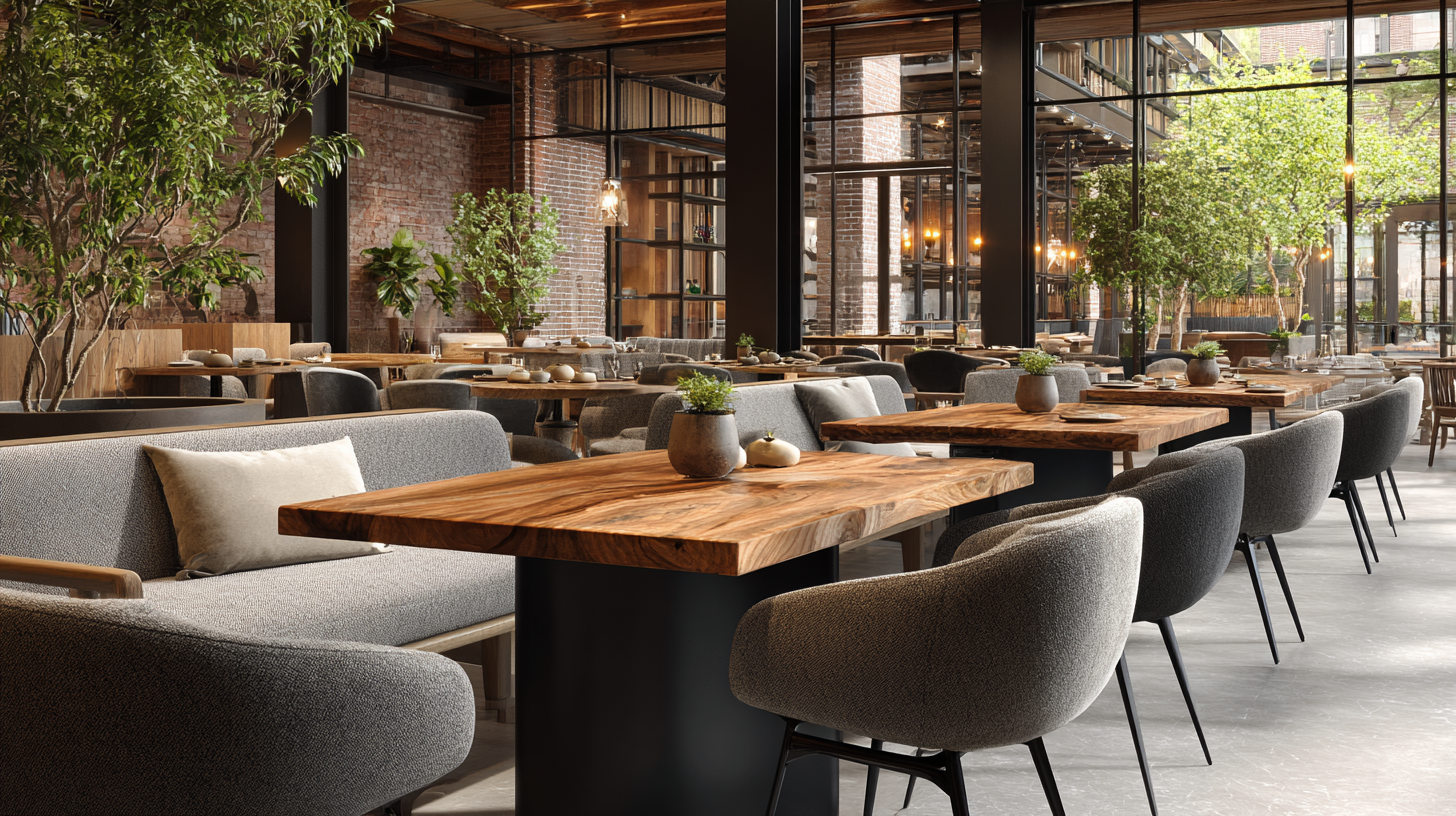
Solid wood tabletops create a warm and natural atmosphere, making them suitable for cafés, bistros, casual restaurants, and hotel dining spaces. Laminate tabletops are practical, cost-effective, and easy to maintain, which makes them useful for fast casual restaurants, cafeterias, and high-traffic dining areas. Sintered stone or stone-look tabletops create a cleaner and more upscale impression, making them suitable for modern restaurants and premium casual concepts. For outdoor dining areas or industrial-style interiors, metal or compact tabletops can provide stronger durability when performance is the priority.
The right tabletop material should balance appearance, maintenance, durability, budget, and the real pressure of daily restaurant service. A beautiful tabletop may attract attention on opening day, but a commercially suitable tabletop is the one that continues to perform after months and years of repeated use.
3. Treat the Table Base as a Core Part of the Design
Many buyers focus heavily on the tabletop and treat the base as a secondary detail, but the table base has a direct impact on stability, legroom, cleaning efficiency, and guest comfort. A beautiful tabletop placed on a weak or poorly matched base can quickly become a daily operational problem, especially in busy restaurants where tables are used continuously throughout the day.
For commercial use, table bases should be stable, durable, and properly matched with the tabletop size and seating layout. Central pedestal bases are often popular because they provide better legroom and make the floor easier to clean, especially when paired with booth seating or compact dining layouts. Four-leg bases can create a lighter and more traditional appearance, but they must be carefully planned to avoid interfering with chair movement, guest comfort, or service pathways.
A restaurant table should feel stable every time a guest touches it, because a wobbling table immediately weakens the dining experience and the perceived quality of the restaurant. In high-traffic commercial spaces, table stability is not a minor detail; it is part of the guest’s first impression.
4. Match Table Size with the Real Dining Experience
The wrong table size can quietly reduce comfort, service efficiency, and seating value. If the table is too small, guests may feel crowded as soon as plates, drinks, menus, and shared dishes arrive. If the table is too large, the restaurant may lose valuable floor space and reduce total seating capacity. This is why table size should always be planned around the menu, service style, tableware setup, average group size, and available floor area.
For two-person dining, compact square tables are often practical because they save space and allow flexible arrangements. For four-person seating, square or round tables can work well depending on the dining concept and traffic flow. For restaurants that often serve families, groups, or shared dishes, rectangular tables or modular table combinations may provide better flexibility and more comfortable food presentation.
A restaurant table should support the meal comfortably instead of forcing guests and staff to work around its limitations. This is especially important for restaurants serving hot pot, barbecue, seafood, large platters, family-style dishes, or full table settings, where tabletop space directly affects the quality of the dining experience.
5. Plan Tables Together with Chairs and Booths
Restaurant tables should not be purchased separately from chairs and booths, because seating height, booth depth, table height, tabletop width, and base position all affect guest comfort. When these elements do not work together, the dining area may look attractive in photos but feel uncomfortable in real use. Guests may have difficulty entering a booth, pulling out a chair, or finding enough legroom under the table.
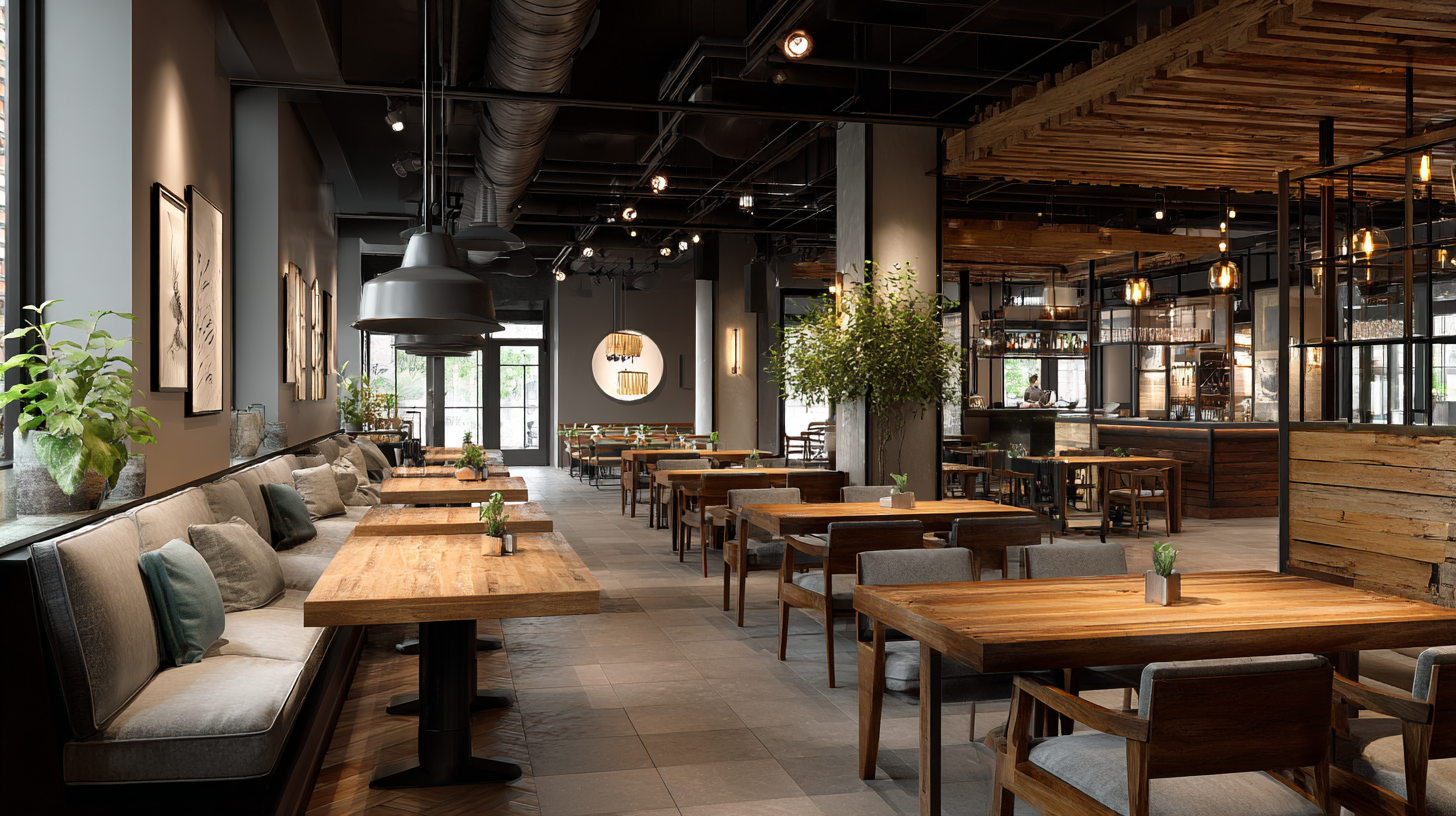
For booth seating, pedestal table bases are often preferred because they provide better access and reduce obstacles under the table. For loose chair layouts, table spacing must allow guests to move chairs comfortably without blocking aisles or disturbing nearby tables. In high-traffic restaurants, this planning becomes even more important because poor spacing can slow down service and make the dining room feel crowded.
Tables, chairs, and booths should be planned as one complete furniture system, not as separate products. When the table height, seat height, booth depth, base position, and aisle spacing work together, the final dining layout becomes more comfortable for guests, more efficient for staff, and more visually consistent for the brand.
6. Consider Cleaning, Maintenance, and Long-Term Appearance
In commercial restaurants, furniture maintenance directly affects operating costs because tables are cleaned many times every day. The surface should resist stains, moisture, scratches, heat, and repeated wiping, while the table edges should be properly finished to prevent damage from daily impact. Once edges begin to chip, peel, or absorb moisture, the entire dining room can start to look older than it really is.
Easy-clean materials can save staff time and help the restaurant maintain a professional appearance during busy service. However, the easiest surface is not always the best choice if it does not match the restaurant atmosphere, so buyers need to balance maintenance performance with visual quality. A premium restaurant may require a richer surface texture, while a cafeteria or quick-service space may prioritize cleaning speed and impact resistance.
The best commercial table is not the one that looks impressive only on opening day, but the one that still looks reliable after years of daily service. Choosing better materials, stronger edge treatment, and stable construction from the beginning can reduce replacement pressure and protect long-term investment.
7. Use Flexible Table Layouts to Improve Business Performance
Restaurant needs change throughout the day, which means flexible table layouts can help operators respond to different dining situations more efficiently. Breakfast guests, lunch crowds, family dinners, business meetings, and larger groups all require different seating arrangements. A fixed layout that only works for one type of customer may waste seats during certain periods and reduce revenue potential.
Modular square tables are useful because they can be used separately for small groups or combined for larger parties. Round tables create a more social dining experience and work well for relaxed restaurants or group dining areas. Rectangular tables are efficient for larger groups, banquet-style seating, or restaurants with long dining zones. The best layout depends on how the restaurant receives guests throughout the day, not only on how the space looks when it is empty.
A flexible table plan can improve seat utilization, table turnover, guest satisfaction, staff movement, and revenue per square meter. Good furniture planning does not only make the restaurant look better; it helps the business perform better every day.


