

Mob/Whatsapp:
+86-18098163178
E-mail:
sales19@rongroup.co


Few elements in restaurant interior design influence the dining experience as significantly as booth seating. Beyond simply providing a place to sit, booths shape the flow of the room, set the tone of the environment, and create a sense of intimacy that many guests prefer over standard chairs. For restaurateurs seeking to balance comfort, efficiency, and brand image, custom upholstered booth seating offers a combination of flexibility and refinement that is difficult to achieve with conventional furniture.
1. Why Restaurants Choose Booths Over Standard Seating
Booth seating contributes to a dining environment in ways that go far beyond aesthetics. Its ability to enhance privacy, organize spatial flow, and maximize seating capacity makes it a favored option for both small and large establishments. Booths naturally guide movement through the dining room, reducing unnecessary traffic between tables and helping staff maintain consistent service flow. They also offer a cozy, enclosed feeling that many guests find more comfortable and secure, especially in restaurants that emphasize extended dining or intimate group experiences.
2. Understanding Booth Configurations
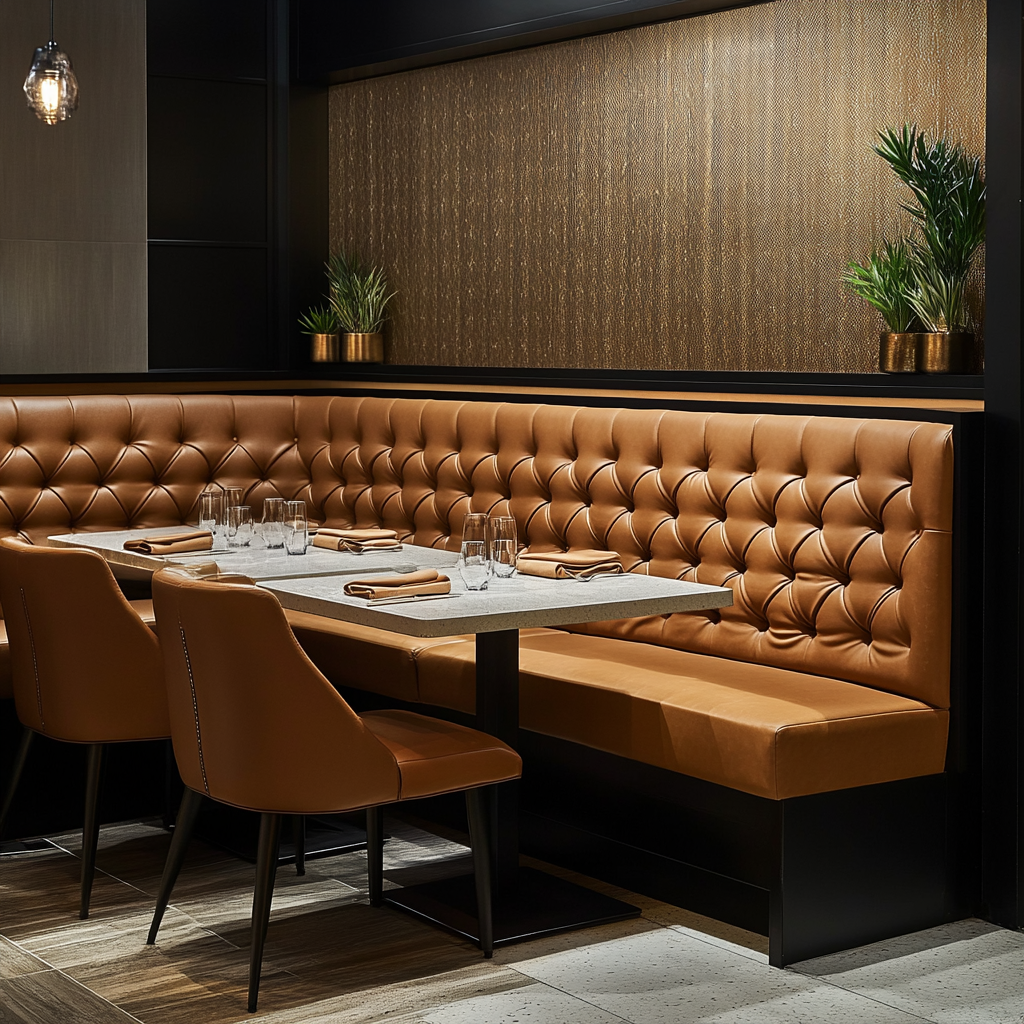
Restaurants can choose from various booth configurations depending on their layout and customer flow requirements. Single booths work well along walls and are ideal for maximizing limited space. Double booths, which place two seating units back-to-back, are particularly efficient in narrow or elongated rooms. U-shaped booths create a communal atmosphere and are often used in party rooms or premium dining zones. Corner booths allow restaurants to transform unused spaces into functional seating, making them a smart solution for awkward layouts.
3. Essential Dimensions and Comfort Considerations
Comfortable booth seating relies heavily on proportion. Seat height, backrest angle, foam density, and table distance must be carefully balanced. A seat height of roughly 460–480 mm accommodates most diners, while a backrest height of 900–1100 mm provides both support and visual presence. Seat depth should be generous enough for comfort but not so deep that guests feel slouched or distant from the table. When planned correctly, booth seating not only enhances the guest experience but also supports efficient table turnover.
4. Upholstery Materials for Commercial Durability
The choice of upholstery significantly affects maintenance and longevity. Commercial-grade vinyl remains one of the most practical options due to its resistance to stains, water, and repeated cleaning. Genuine leather, while costlier, elevates the perceived value of the dining space and develops character over time. Fabric or velvet upholstery introduces softness and elegance, but they require environments where spills are less frequent. Performance fabrics offer an ideal middle ground, combining durability with a refined appearance through anti-bacterial, stain-resistant, and water-repellent technologies.
5. Structural Quality and Internal Build
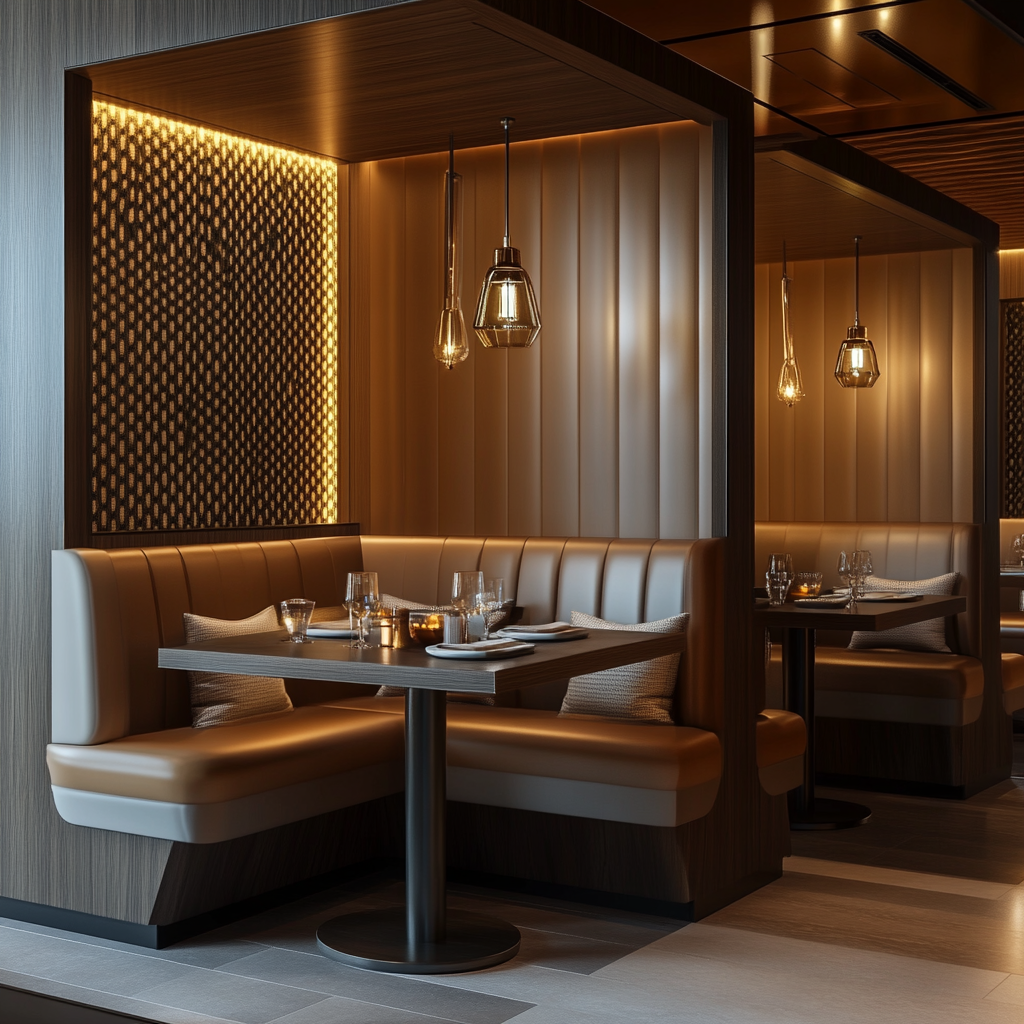
What lies beneath the upholstery determines whether a booth can maintain its shape and stability over years of use. Durable commercial booths typically feature solid hardwood frames, reinforced joints, commercial-grade plywood backings, and high-density foam that maintains its resilience. These elements collectively ensure that the seating does not sag, squeak, or deform even under continuous daily use.
6. Effective Space Planning Strategies
Thoughtful placement of booths can dramatically improve the dining room’s overall functionality. Positioning booths along perimeter walls frees central space for movable seating. Using double booths can streamline traffic flow and increase capacity along narrow corridors. U-shaped booths promote group seating without occupying excessive floor area. Proper aisle spacing—generally around 1000 mm—ensures comfort for both guests and staff. When paired with 3D planning or professional layout support, booth seating becomes a powerful tool for harmonizing design and performance.
Conclusion
Custom upholstered booth seating enhances not only the comfort of the dining experience but also the efficiency and perceived value of the restaurant environment. By selecting high-quality materials, ensuring structural integrity, and planning the layout strategically, restaurateurs can create a cohesive, welcoming space that supports both aesthetics and operations for many years.


