

Mob/Whatsapp:
+86-18098163178
E-mail:
sales19@rongroup.co


Marble restaurant tables have become a signature element in many modern hospitality concepts, largely because they combine exceptional durability, timeless elegance, and a premium visual appeal that aligns seamlessly with upscale dining environments. While marble has traditionally been associated with luxury interiors, its performance in commercial settings — when supported by the right construction and finish — has elevated it into a highly practical choice for restaurants that wish to enhance both design and longevity.
1. Why Marble Performs Exceptionally Well in Commercial Dining
Marble has an inherently solid structure and a natural resistance to heat and abrasion, making it particularly suitable for busy restaurants where tables are constantly in use. Unlike synthetic surfaces, marble develops subtle variations over time, giving the dining environment a sense of character and permanence. Its ability to withstand high temperatures, resist daily wear, and maintain a luxurious appearance even in demanding environments makes it a favorite among steakhouses, fine-dining establishments, boutique cafés, and hotel dining rooms.
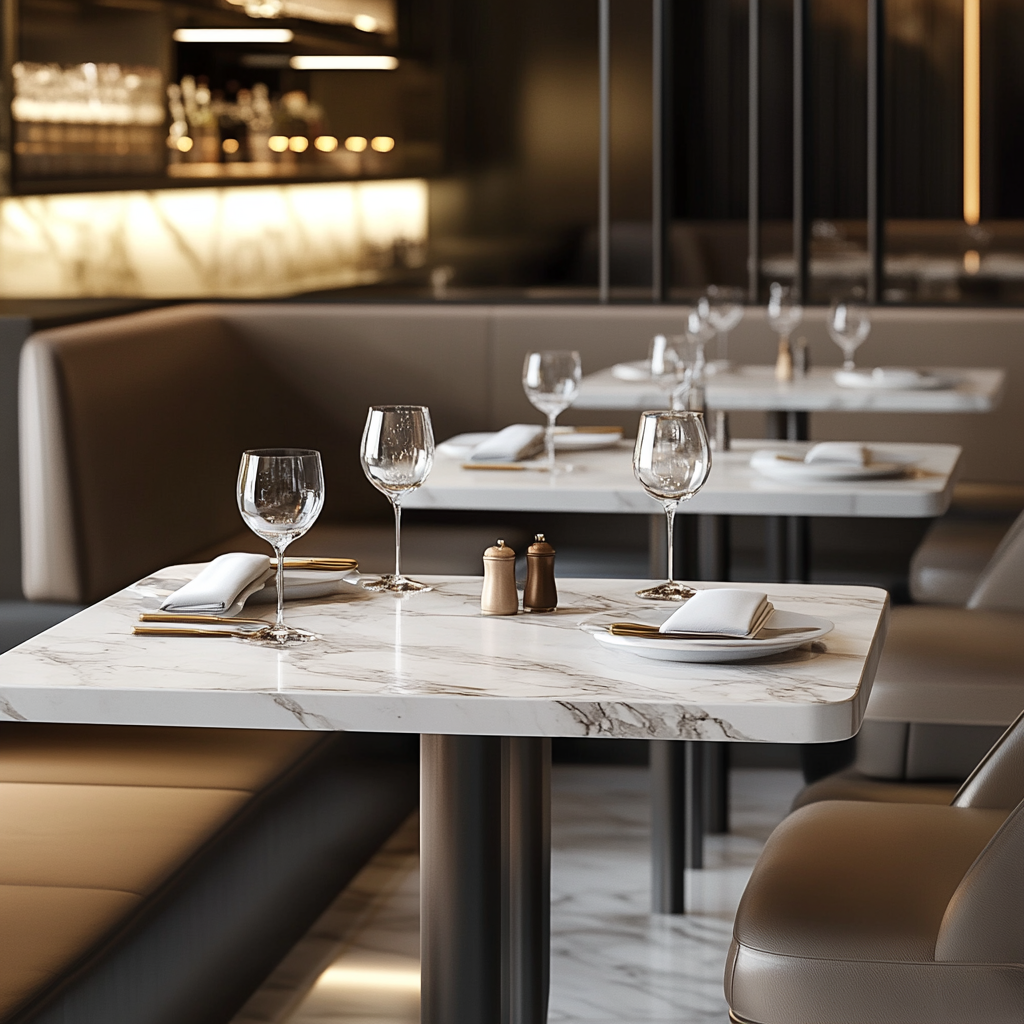
2. Understanding Different Types of Marble
Carrara Marble
Known for its soft gray tones and delicate veining, Carrara marble is often chosen for its understated elegance and excellent cost-to-value ratio. Its subtle patterning works well in minimalist and contemporary interiors.
Calacatta Marble
With its bold veining and bright white base, Calacatta marble stands out as a premium option. Restaurants aiming for a dramatic or luxurious ambiance often gravitate toward Calacatta due to its rich visual depth.
Emperador Marble
Characterized by deep brown hues and intricate veining, Emperador marble brings warmth to restaurant interiors and is frequently used in lounges, wine bars, and darker-themed restaurants.
Choosing the right marble type directly affects the restaurant’s atmosphere and brand identity, making this one of the most important decisions in the procurement process.
3. Importance of a Stable and Well-Constructed Table Base
Marble is heavier than most tabletop materials, which means the base must be engineered for stability and safety. Cast iron bases are widely considered the most reliable due to their weight and balance. Pedestal bases offer comfortable legroom, while stainless steel or modern metal bases enhance contemporary interiors. The base-to-top proportionality must be precise, ensuring the table does not lean, wobble, or tilt under pressure.
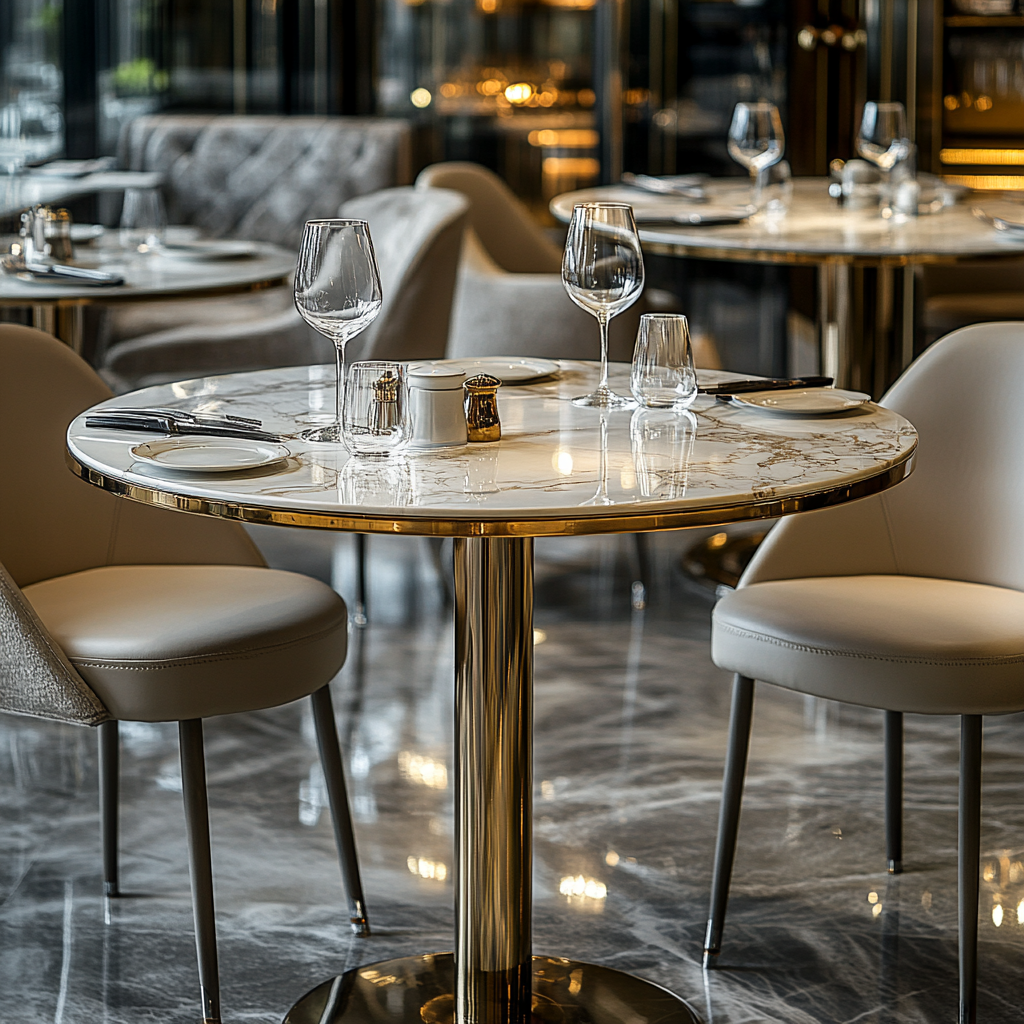
4. Durability Considerations in High-Traffic Restaurants
While marble is naturally durable, its performance in a restaurant environment depends heavily on surface treatment and finishing. Professional sealing helps prevent stains and moisture absorption, making daily cleaning faster and more effective. Rounded edges improve safety, especially in crowded dining rooms, while thicker slabs provide better load distribution and long-term structural integrity.
5. Choosing the Right Size and Shape
Table size should reflect guest flow, seating arrangements, and the desired dining experience. Smaller square or round tables work well in cafés and quick-service restaurants, while larger rectangular or communal tables support group dining. In high-end establishments, round marble tables help soften the room visually, improving the overall sense of luxury.
Conclusion
Marble restaurant tables strike a balance between visual sophistication and commercial functionality. By selecting the right marble type, base structure, finish, and size, restaurant owners can create a dining environment that not only looks remarkable but also withstands years of frequent use. A well-crafted marble table is both a design centerpiece and a long-term investment, enhancing the overall dining experience and reinforcing a strong brand identity.


