This article examines seating layout decisions from the perspective of restaurant groups managing multiple locations.
Single-location restaurants prioritize uniqueness. Multi-location brands prioritize consistency. Seating decisions must support replication without compromising operational efficiency.
Fixed seating restaurant layouts offer repeatability. Booths, banquettes, and built-in benches define seating counts, aisle widths, and traffic flow. This consistency simplifies staff training and minimizes layout-related variability between locations.
Flexible layouts introduce complexity. Chairs and tables can be reconfigured, but over time, configurations drift. Seat counts change, circulation patterns weaken, and guest experience becomes inconsistent. For multi-unit operations, this variability complicates performance benchmarking.
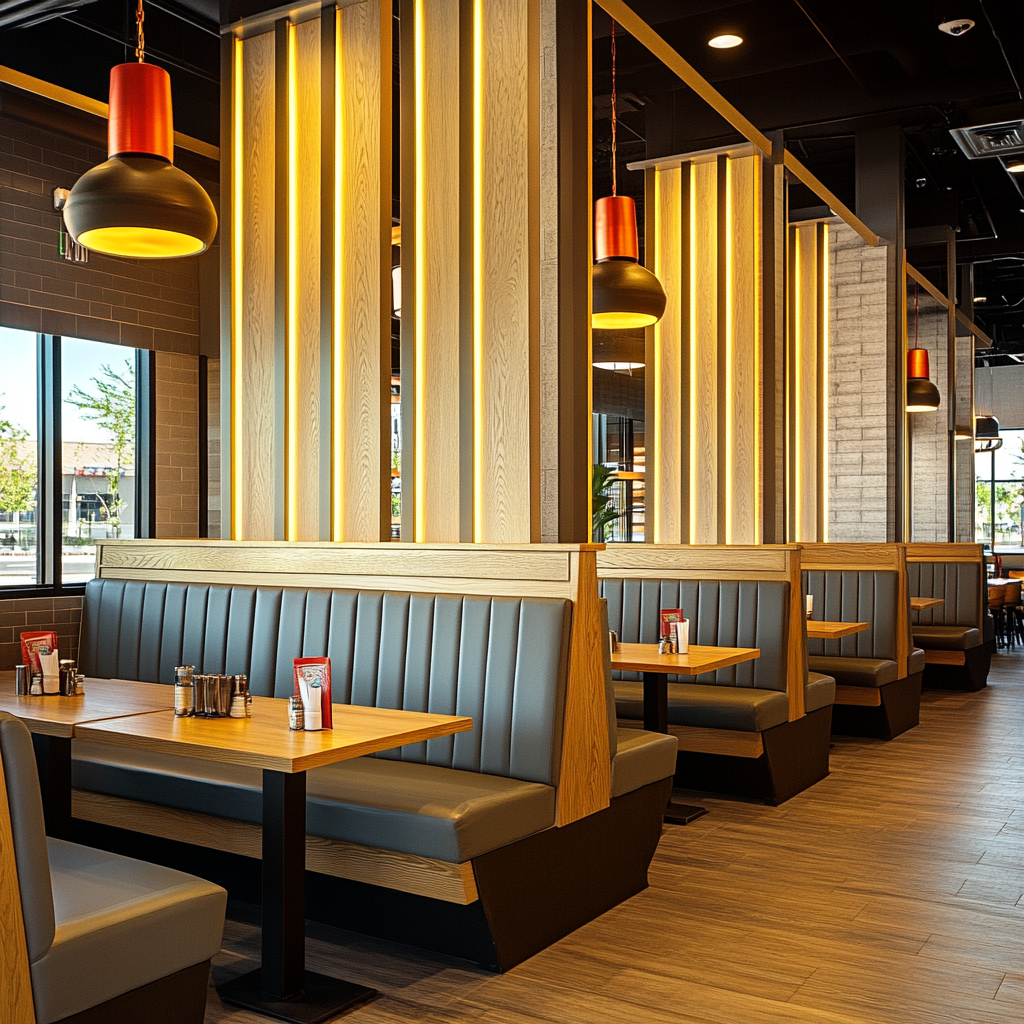
Standardized seating cores solve this issue. Many restaurant groups adopt fixed seating along walls and perimeter zones while reserving flexible seating for secondary areas. This hybrid approach maintains brand consistency while allowing limited adaptability.
Standardization also improves procurement. When dimensions, finishes, and materials are consistent, replacement and expansion become predictable. Restaurant furniture standardization reduces lead times, errors, and long-term costs.
For growing brands, seating is no longer a decorative decision. It becomes a system that supports scale.


