

Mob/Whatsapp:
+86-18098163178
E-mail:
sales19@rongroup.co


As restaurant brands expand, complexity increases faster than seat count.
For chain operators, success depends on repeatability—and chain restaurant furniture is a core part of that system.
Standardizing furniture specifications allows brands to scale without sacrificing consistency, operational efficiency, or brand identity. Without clear standards, every new location becomes a custom problem.
Why Standardized Restaurant Furniture Matters for Chains
Independent restaurants can afford to make case-by-case decisions. Chains cannot.
Without standardized restaurant furniture, multi-location operators face:
Inconsistent seating comfort
Unpredictable maintenance costs
Long replacement lead times
Visual drift across locations
Standardization ensures that every restaurant delivers the same experience, regardless of geography.
Furniture Specifications Are Operational Standards
In scalable systems, restaurant furniture specifications function like operating procedures. They define how furniture performs, not just how it looks.
Typical standardized specs include:
Overall dimensions and tolerances
Seat height and depth
Upholstery materials and color codes
Structural materials and load ratings
Clear specifications reduce ambiguity and eliminate guesswork during production, procurement, and installation.
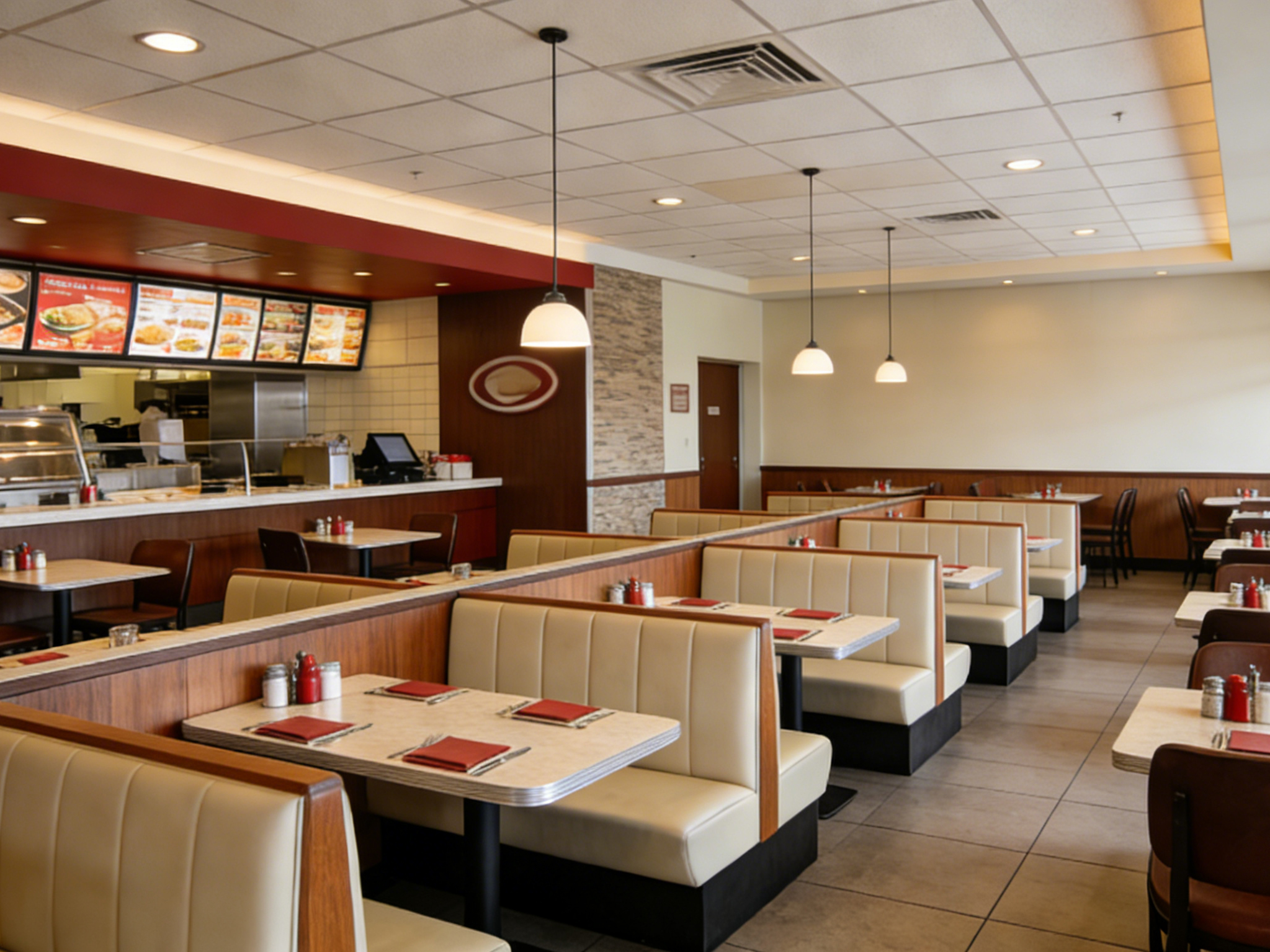
Multi-Location Restaurant Furniture Requires Consistency, Not Creativity
When sourcing multi location restaurant furniture, variation is the enemy of efficiency.
Even small inconsistencies—such as a 10 mm difference in seat height—can:
Disrupt layout planning
Complicate replacements
Create uneven guest experiences
Chain brands prioritize predictability over novelty. Once a furniture system proves reliable, it becomes a repeatable asset rather than a design variable.
Commercial Restaurant Furniture Standards Reduce Long-Term Cost
Well-defined commercial restaurant furniture standards lower total cost over time by simplifying:
Reordering and replenishment
Partial replacements after damage
Inventory management across regions
Instead of redesigning furniture for every project, chains reorder from an established system, keeping unit costs stable and timelines short.
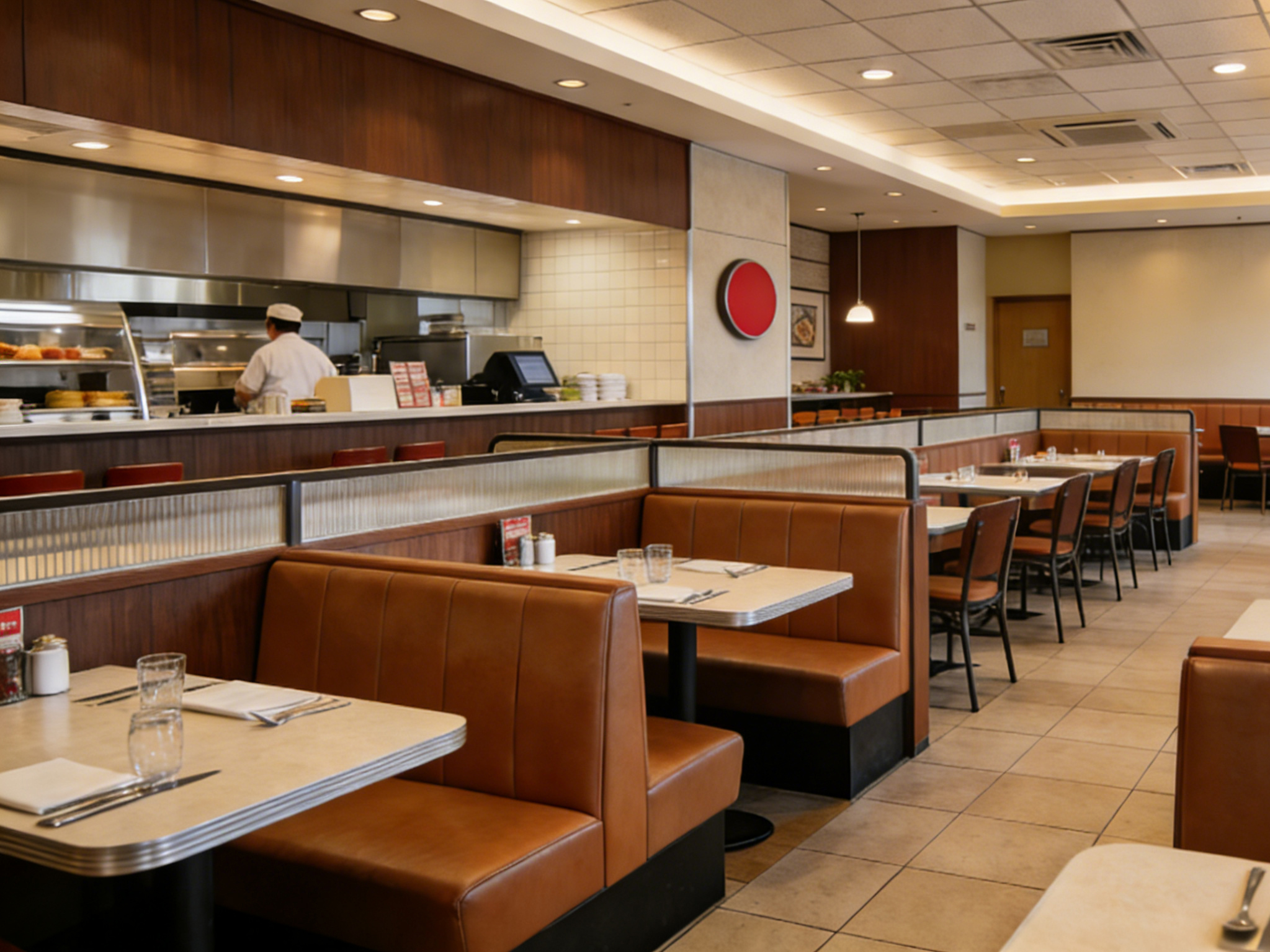
Chain Restaurant Seating as a Modular System
Effective chain restaurant seating is modular by design.
Standardized seating systems allow brands to:
Combine booths, tables, and chairs consistently
Adapt layouts without changing components
Maintain brand identity across different floor plans
Modularity supports growth while preserving control.
Restaurant Furniture Standardization Simplifies Global Sourcing
As brands expand internationally, restaurant furniture standardization becomes even more critical.
Clear standards allow:
Multiple factories to produce identical products
Faster onboarding of new suppliers
Consistent quality control across regions
This approach minimizes risk while supporting large-scale rollouts.
Restaurant Furniture Sourcing for Chain Expansion
Strategic restaurant furniture sourcing focuses on long-term partnerships rather than one-off purchases.
Chains favor suppliers that can:
Maintain stable specs over years
Support phased rollouts
Provide documentation and sample control
Furniture sourcing becomes an extension of brand management, not a procurement task.
Final Perspective
For growing brands, furniture is not decoration—it is infrastructure.
Chains that treat furniture as a standardized system scale faster, spend less, and maintain stronger brand consistency. By defining clear specifications and enforcing them across locations, restaurant groups turn furniture into a competitive advantage rather than an operational burden.


