This article explores the mechanical link between furniture arrangement and operational profitability. By optimizing aisle widths, balancing booth-to-chair ratios, and selecting the right table shapes, restaurants can enhance staff performance and guest throughput simultaneously.
In the competitive landscape of commercial hospitality, furniture is more than an aesthetic choice—it is an operational tool. A scientifically planned seating layout minimizes "friction" in service delivery, directly impacting labor costs and peak-hour revenue.
1. Optimizing Service Arteries to Minimize "Dead Miles"
The physical distance a server travels determines the speed of service. Even small layout adjustments can significantly reduce staff fatigue and response times.
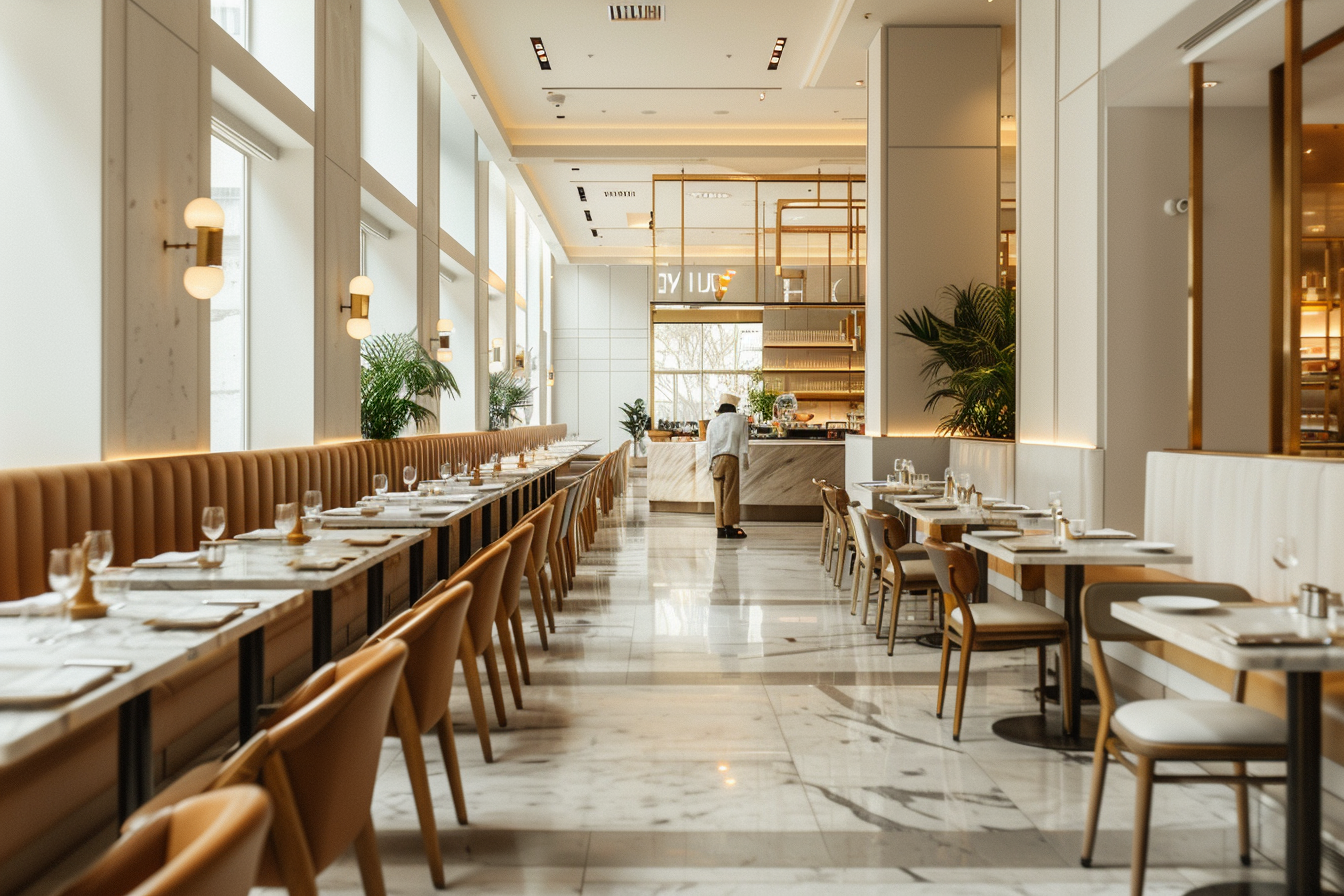
Main Aisle Clearance: Primary traffic veins should maintain a width of 90cm to 110cm. This allows two servers to pass each other comfortably, preventing "traffic jams" during peak dining hours.
Strategic Service Stations: Integrating compact service hubs within high-density zones reduces the travel distance for replenishing cutlery or water, keeping servers on the floor and visible to guests.
2. The Strategic Ratio: Booths vs. Loose Seating
The mix of furniture types dictates the "cadence" of the dining room.
The Power of Booths: Fixed booths create defined spatial boundaries, reducing the psychological and physical interference of aisle traffic. This sense of enclosure often leads to a more focused dining experience, which can be leveraged to maintain a consistent turnover rhythm.
The Agility of Loose Chairs: Maintaining 20% to 30% flexible loose seating is essential for modularity. These sections can be quickly reconfigured for large parties, preventing the "wasted seat" phenomenon during high-demand periods.
3. Table Geometry and Psychological Turnover
Furniture dimensions subtly influence how long a guest occupies a seat.
Efficiency-First Dimensions: Selecting chairs with ergonomic lumbar support but standard seat heights (rather than deep-recline lounges) ensures guest comfort while subtly discouraging "camping" after the meal is finished.
Square vs. Round Tables: Square or rectangular tables are 15% more space-efficient than rounds when placed against walls or in rows. This reclaimed space can be converted into wider service lanes or additional covers without making the room feel crowded.
Conclusion
Excellence in restaurant design lies in the balance between visual allure and operational logic. By aligning furniture dimensions with service flow, hospitality brands can lower invisible labor costs and unlock the full revenue potential of their floor plan.


