

Mob/Whatsapp:
+86-18098163178
E-mail:
sales19@rongroup.co


In the competitive landscape of modern restaurant seating, the true cost of an interior is not found on the initial invoice—it is calculated over the functional life of the product. While residential-grade furniture often appears identical to professional alternatives in a catalog, the structural "fatigue" caused by hundreds of daily guests quickly turns a perceived saving into a recurring capital drain.
Understanding the mechanics of commercial restaurant furniture is the first step toward transforming your decor into a high-yield financial asset.
1. The Hidden Math of the Replacement Cycle
A standard chair in a wholesale hospitality furniture catalog is an investment in durability. When choosing between contract grade furniture vs. residential, the primary differentiator is the "cycle of failure."
The "Cheap" Trap: A residential chair is designed for 2–4 hours of use per day. In a high-traffic bistro, it will likely suffer joint failure within 18 months. Replacing a $50 chair three times over five years costs $150, excluding shipping and assembly labor.
The Asset Approach: Investing in durable restaurant chairs with reinforced joinery ensures a single purchase lasts the full 5-year cycle. This strategic choice offers a 25% to 40% lower total cost of ownership (TCO), significantly boosting your restaurant furniture ROI.
2. Material Integrity: The Science of "Commercial Grade"
What defines commercial restaurant furniture is often invisible to the naked eye. It is the engineering beneath the surface that protects your brand’s reputation.
Reinforced Construction: Unlike household items, professional seating utilizes high-density hardwoods or cold-rolled steel frames. These materials resist the structural "sway" and wobbling that lead to guest discomfort and safety liabilities.
Performance Fabrics: Hospitality-grade textiles are rated by the Martindale rub test. While residential fabrics fail at 15,000 rubs, contract-grade materials often exceed 50,000 double rubs, preventing pilling and thinning in high-contact zones.
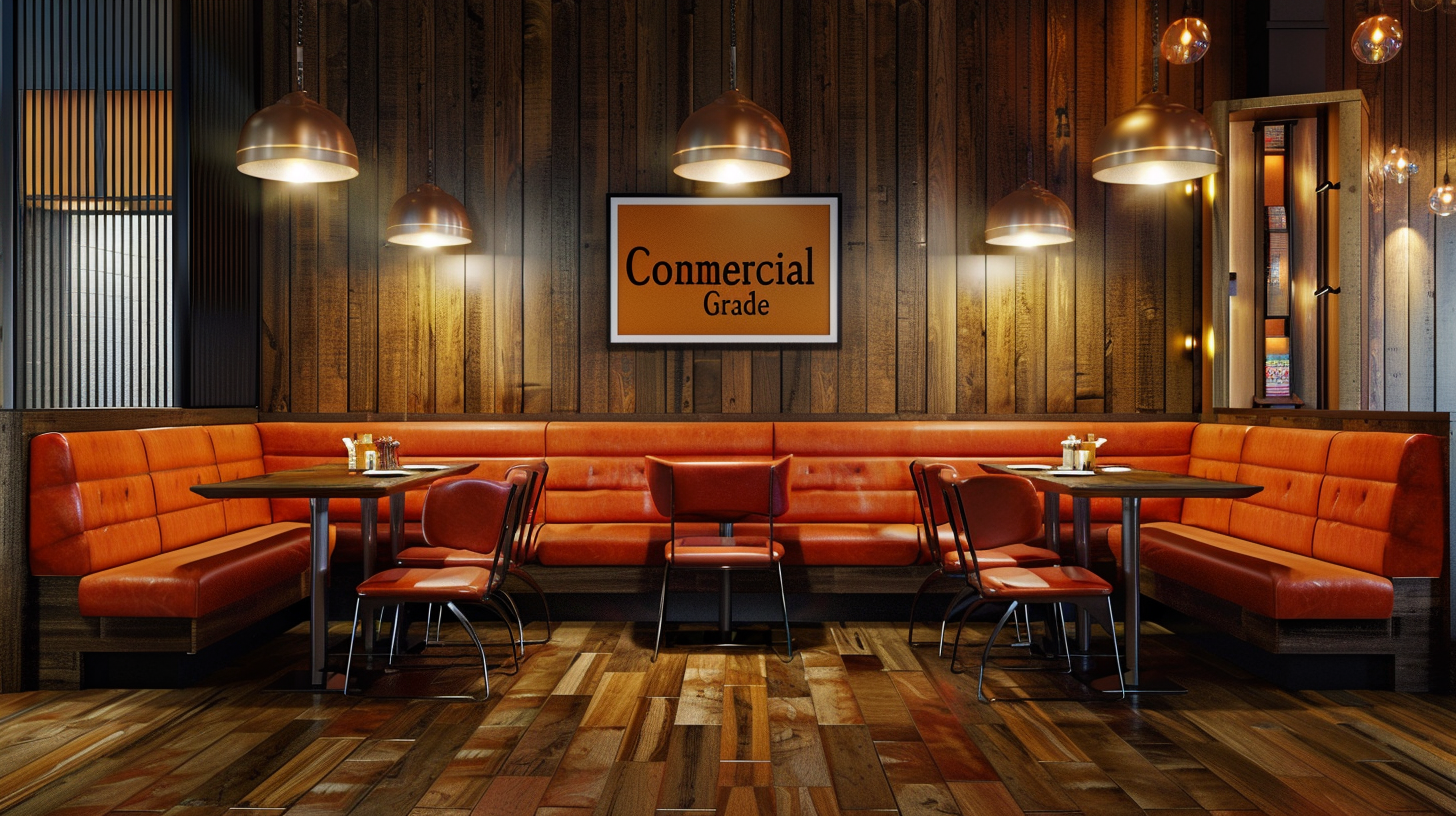
Custom Restaurant Booths: For high-capacity venues, custom restaurant booths provide a structural stability that loose seating cannot match, offering a permanent, "zero-maintenance" seating solution for the duration of your lease.
3. Brand Equity and Maintenance Efficiency
Furniture is a silent communicator of your restaurant’s hygiene and quality standards.
Industrial-Strength Finishes: Modern restaurant seating is finished with catalyzed lacquers or powder coatings designed to withstand daily chemical sanitization. Residential finishes often cloud or peel when exposed to industrial cleaners.
Consistent Scalability: Choosing a professional wholesale hospitality furniture partner ensures long-term SKU availability. If you expand your brand in three years, you can source the exact same models—maintaining a cohesive brand identity that is impossible with "fast-furniture" retailers.
Conclusion
Transitioning from residential-grade furniture to commercial restaurant furniture is a shift from short-term expenditure to long-term wealth protection. By prioritizing durable restaurant chairs and understanding the structural requirements of the hospitality industry, operators ensure their space remains a premium, stable environment for every guest, every day.


